Engineering modern high-speed custom web apps requires a fundamental reimagining of distributed systems, frontend rendering paradigms, and edge computing architectures in 2026. As digital customer expectations reach unprecedented heights, even slight latency delays directly degrade user engagement, conversion rates, and search rankings. Enterprise organizations can no longer rely on monolithic client-side single page apps or legacy centralized server farms to support global user bases.
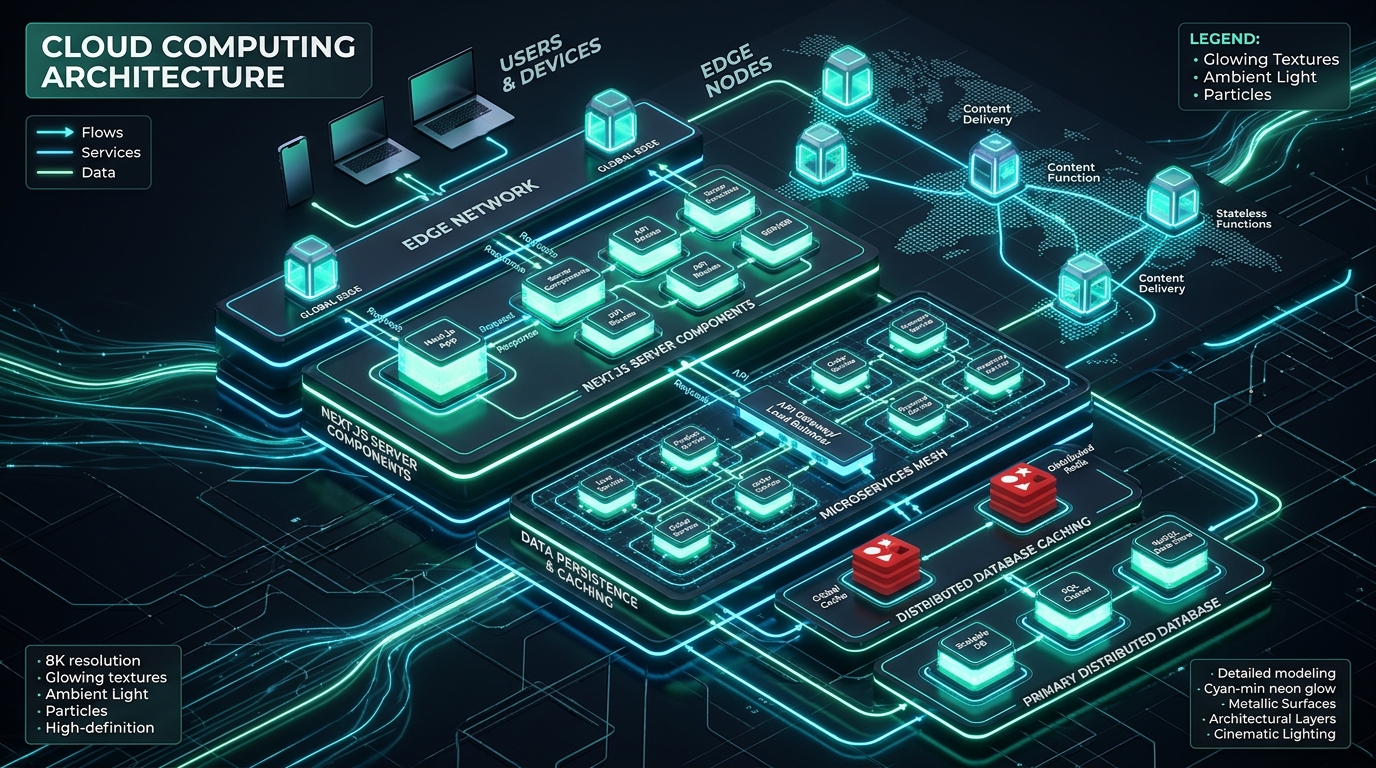
Instead, architecting resilient high-speed custom web apps entails distributing computational workloads across edge nodes, leveraging React Server Components, and deploying intelligent multi-tier caching topologies. By executing data fetches close to the user and streaming pre-rendered HTML over HTTP/3, modern platforms achieve sub-second page loads universally. At Growth Lab Web Development, our engineering architects build high-performance custom web applications designed for continuous scale.
⚡ Architectural Pillars of Modern Web Apps
- ✓Edge-Native Compute: Route dynamic requests to serverless edge workers located within 50ms of the user.
- ✓Streaming SSR & Suspense: Deliver critical navigation frames instantly while asynchronous components resolve in parallel.
- ✓Distributed Database Caching: Implement Redis and Edge KV stores to eliminate recurring SQL query latency.
1. Designing High-Speed Custom Web Apps on the Edge
Historically, web applications operated from centralized cloud data centers located in single geographic regions (e.g., US-East). When an international user in Europe or Asia accessed the application, physical speed-of-light round trips over fiber optic cables introduced 200 to 500 milliseconds of unavoidable network latency before the server even began processing the request. In modern engineering of high-speed custom web apps, edge compute eliminates physical distance penalties.
Modern edge computing networks—powered by providers such as Cloudflare Workers and Vercel Edge Runtime—deploy lightweight V8 JavaScript isolate runtimes across hundreds of global points of presence. By executing authentication checks, geo-routing, and personalizations at the edge node nearest to the user, Time to First Byte (TTFB) drops below 50 milliseconds globally. For technical insights into modern edge infrastructure, read Cloudflare's Architectural Guide to Edge Computing.
| Architecture Layer | Legacy Monolithic Approach | Modern Edge-Native Stack | Performance Advantage |
|---|---|---|---|
| Rendering Engine | Client-Side SPA (Heavy JS bundle) | React Server Components + Edge SSR | 90% reduction in initial device CPU load. |
| Data Layer Latency | Direct SQL queries on centralized DB | Edge KV + Distributed Redis caching | Sub-5ms response for cached payloads. |
| Media Delivery | Static S3 storage without dynamic sizing | Automated AVIF/WebP edge conversion | 70% decrease in image payload size. |
| Security Perimeter | Firewalls on origin application server | DDoS mitigation & WAF at global edge | Zero origin exposure to malicious bots. |
2. Streaming SSR and React Suspense Boundaries
In traditional server-side rendering, if one database query takes 800 milliseconds to resolve, the entire page response is blocked until that single operation completes. Users see a blank screen while the server waits.
With Next.js App Router and React Suspense, developers wrap slower dynamic components in granular Suspense boundaries. The server immediately streams the initial HTML document shell, navigation bars, and critical hero content to the client within milliseconds. As slower asynchronous components resolve in the background, their pre-rendered HTML chunks stream down the existing open HTTP connection and seamlessly pop into place without page reloads. This streaming capability is essential for building high-speed custom web apps that feel instantaneous.
3. Eliminating Database Bottlenecks with Distributed Caching
High-traffic web apps frequently fail under load when thousands of simultaneous requests hammer the primary relational database. Deploying an in-memory caching layer such as Upstash Redis or AWS ElastiCache decouples read operations from primary transactional storage.
Furthermore, utilizing tag-based on-demand cache revalidation ensures that edge-cached pages remain blazing fast while reflecting immediate data changes whenever editors or users perform updates. Explore how our engineering team delivers production-ready high-speed custom web apps across our Engineering Portfolio Work.
4. Database Connection Pooling and Serverless Latency Management
In a serverless edge architecture, individual stateless functions spin up and terminate dynamically in response to incoming HTTP traffic. If each serverless worker initiates a direct TCP connection to a PostgreSQL or MySQL cluster, the database quickly exceeds its maximum connection pool, resulting in connection timeouts and 500 server errors.
To prevent connection exhaustion, modern engineering architectures implement proxy connection poolers such as Prisma Accelerate, PgBouncer, or Supabase connection pooling. These middleware proxies maintain persistent open socket connections to the database, allowing thousands of ephemeral edge worker requests to multiplex efficiently across a compact, reusable pool of database threads. Solving connection latency is a fundamental requirement when deploying high-speed custom web apps at enterprise scale.
5. Zero-Downtime Blue-Green Canary Deployments
For mission-critical digital platforms processing millions in annual transactions, taking websites offline for maintenance windows is unacceptable. Modern enterprise hosting architectures leverage blue-green and canary deployment pipelines managed at the CDN DNS routing layer.
When a new software version is tagged, containerized production instances are deployed to a private staging environment and subjected to automated synthetic health checks. Once validated, edge routing gradually shifts 5% of incoming live user requests to the new container cluster. If error rates remain flat and response times pass latency budgets, traffic shifts to 100% instantly with zero user interruption. Deploying continuous delivery pipelines guarantees that high-speed custom web apps evolve reliably without downtime.
6. Modern CI/CD and Automated Performance Budgets
Sustaining sub-second performance requires disciplined engineering practices. During team development cycles, introducing uncompressed images, bulky third-party libraries, or unoptimized npm packages can instantly degrade Core Web Vitals.
Leading software engineering teams integrate automated bundle analyzers and Lighthouse CI directly into their GitHub deployment workflows. If a proposed pull request exceeds allocated JavaScript bundle size budgets or reduces Core Web Vitals scores below 95, automated tests prevent merging until the code is optimized. Maintaining strict standards guarantees that all high-speed custom web apps remain optimized through years of feature updates. Learn more about our technical standards on our About Growth Lab page.
7. Enterprise Architecture Checklist for High-Speed Custom Web Apps
To ensure your software engineering organization delivers resilient, ultra-responsive digital products, evaluate your architecture against these core benchmarks for high-speed custom web apps:
- Global Edge Compute: Deploy serverless worker runtimes across edge nodes to process requests within 50ms of end users.
- Selective Server Component Hydration: Confine client-side JavaScript execution strictly to interactive UI leaves.
- Distributed Database Read Replicas: Offload read queries to geographically distributed in-memory Redis caches.
- Streaming SSR and Suspense: Deliver initial page shells immediately over HTTP/3 while dynamic backend queries stream in parallel.
- Automated CI/CD Performance Budgets: Enforce automated Lighthouse gates to block pull requests that degrade Core Web Vitals.
- Zero-Downtime Blue-Green Deploys: Shift traffic gradually at the CDN layer to eliminate maintenance downtime during releases.
Following this architectural blueprint empowers engineering teams to build high-speed custom web apps that scale to millions of concurrent users without performance degradation.
In addition, modern cloud architects implement multi-region failover and geo-redundant read replicas to insulate mission-critical applications from regional cloud outages. When an entire AWS or Google Cloud availability zone experiences connectivity failure, edge CDN routing automatically reroutes active traffic to the nearest healthy replica cluster within 250 milliseconds. This multi-layered resiliency ensures that your digital platforms deliver uninterrupted enterprise uptime while preserving lightning-fast interactive responsiveness.
Combining intelligent edge routing with automated load shedding protects origin servers during unexpected viral surges, ensuring that modern high-speed custom web apps maintain sub-second responsiveness regardless of peak concurrent traffic volumes.
Adopting modular micro-frontend patterns and edge middleware routing provides modern software organizations with unprecedented operational flexibility, rapid developer velocity, and sub-second application performance across all consumer devices worldwide.
Build a World-Class Custom Web Application
Transform your digital vision into an ultra-fast, highly scalable enterprise web application engineered with Next.js and global edge infrastructure.